The North Atlantic Treaty
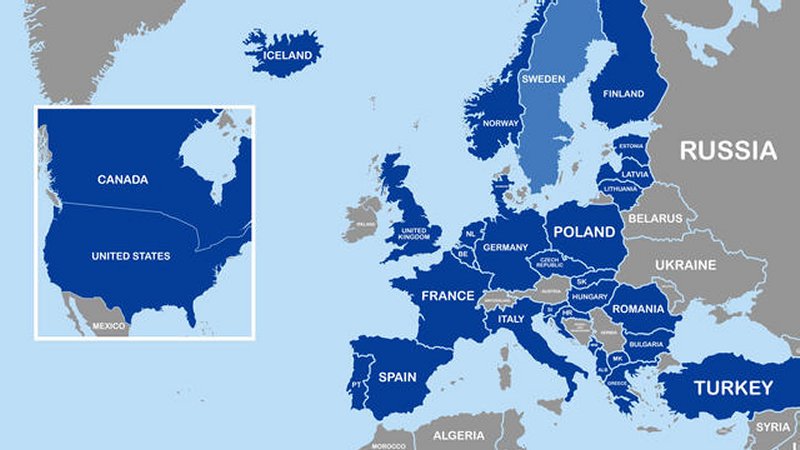
On April 4, 1949, in Washington D.C., the representatives of 12 nations signed the North Atlantic Treaty [1]. Those 12 nations were Belgium, Canada, Denmark, France, Iceland, Italy, Luxembourg, Netherlands, Norway, Portugal, the United Kingdom, and the United States. Thus began the North Atlantic Treaty Organization (NATO).
The preamble to the treaty defines its purpose:
The Parties to this Treaty reaffirm their faith in the purposes and principles of the Charter of the United Nations and their desire to live in peace with all peoples and all governments.
They are determined to safeguard the freedom, common heritage and civilisation of their peoples, founded on the principles of democracy, individual liberty and the rule of law. They seek to promote stability and well-being in the North Atlantic area.
They are resolved to unite their efforts for collective defence and for the preservation of peace and security. They therefore agree to this North Atlantic Treaty.
Three countries joined NATO in the next decade … Greece (1952), Turkey (1952) and Germany (1955). Spain added its name to the treaty in 1982.
Fourteen more countries … Czech Republic (1999), Hungary (1999), Poland (1999), Bulgaria (2004), Estonia (2004), Latvia (2004), Lithuania (2004), Romania (2004), Slovakia (2004), Slovenia (2004), Albania (2009), Croatia (2009), Montenegro (2017), and North Macedonia (2020) … joined the treaty after the dissolution of the Soviet Union.
Russia invaded Ukraine on February 24, 2022. On May 18, 2022, formerly neutral Finland and Sweden asked to join NATO. Finland was formally admitted on April 4, 2023. This brought the total number of member nations to 31. NATO signed the accession protocol needed for Sweden‘s membership on July 5, 2022. The protocol was ratified by most member nations. Turkey was concerned because some Kurdish groups were active in Sweden. After negotiations facilitated by the United States, Turkey ratified Sweden’s membership on January 23. 2024. Hungary is the only remaining holdout. Its vote has been delayed by its internal politics.
Article 5 of the NATO Treaty
Article 5 of the treaty is the most important in relation to Russia’s invasion of Ukraine. It says:
The Parties agree that an armed attack against one or more of them in Europe or North America shall be considered an attack against them all and consequently they agree that, if such an armed attack occurs, each of them, in exercise of the right of individual or collective self-defence recognised by Article 51 of the Charter of the United Nations, will assist the Party or Parties so attacked by taking forthwith, individually and in concert with the other Parties, such action as it deems necessary, including the use of armed force, to restore and maintain the security of the North Atlantic area.
Article 5 has been invoked only once. It was not necessary for 72 years. Then, on September 11, 2001, Al Qaeda launched murder/suicide attacks on the United States of America. The NATO nations agreed that that act of terrorism was sufficient cause for invoking Article 5.
Ukraine is not a NATO member but, as shown in the map at the top of this article, it is bordered by countries that are. Those NATO countries are, from largest to smallest, Poland, Romania, Hungary, and Slovakia. Estonia, Finland, and Latvia border Russia itself. Lithuania borders Belarus, a country whose government is strongly allied with Russia. [2] If Ukraine falls, who’s next. Perhaps a bordering NATO nation.
Why would Russia attack NATO Countries?
On December 28, 1922, delegates from the Russian SFSR, the Transcaucasian SFSR, the Ukrainian SSR and the Byelorussian SSR[3] approved the Treaty on the Creation of the USSR and the Declaration of the Creation of the USSR … the Union of Soviet Socialist Republics or, more simply, the Soviet Union. In May of 1955, during the Cold War, the Soviet Union, Albania, Bulgaria, Czechoslovakia, East Germany, Hungary, Poland, and Romania signed the Treaty of Friendship, Cooperation and Mutual Assistance … the Warsaw Pact.
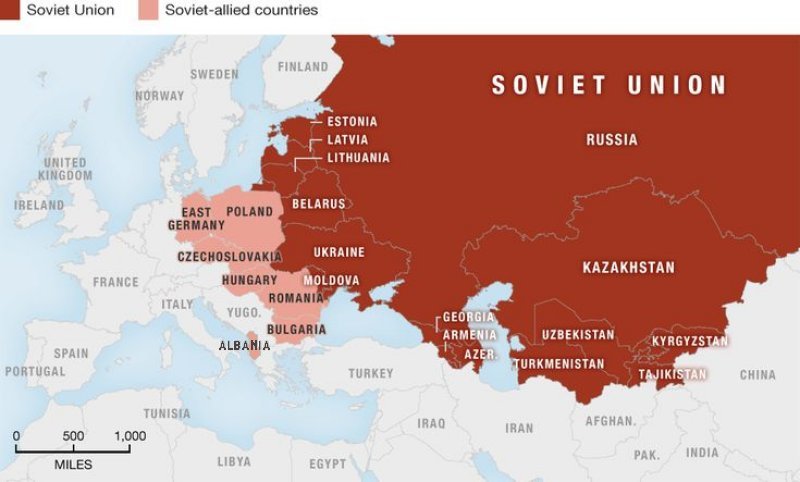
Belarus, Estonia, Latvia, Lithuania, Moldova, and Ukraine were part of the Soviet Union. Russia was the largest and most powerful member of the USSR. All other members were little more than satellite states. The Warsaw Pact added Albania, Bulgaria, Czechoslovakia, East Germany, Hungary, Poland and Romania to Russia’s overwhelming influence.
After the Cuban Missile Crisis in 1962, the Soviet Union fell into a period of economic stagnation. In 1985, the Soviets selected Mikhail Gorbachev as their leader. Gorbachev made significant changes in the economy and leadership. He reduced the heretofore deep government censorship and refused to interfere with the internal politics of other Warsaw Pact countries.
By 1989, the Warsaw Pact and the Soviet Union started to “come apart at the seams”. The Communist governments of Poland, Hungary, East Germany, Czechoslovakia, Bulgaria, Romania, and Albania lost power. On November 9, 1989, during the Peaceful Revolution, the Berlin Wall fell. This signaled the end of the Cold War between the Soviets and the West. The Polish Solidarity Movement, the reunification of Germany, and pro-western movement in other satellite natations ended the Warsaw Pact. It was declared disbanded on February 25, 1991. The Soviet Union disestablished itself in December of that same year.
Vladimir Putin was born on October 7, 1952 in Leningrad. (now Saint Petersburg). He was the youngest of three children. His grandfather, Spiridon Putin, was a personal cook to Vladimir Lenin and Joseph Stalin. Putin’s birth was preceded by the deaths of two brothers. One died in infancy. The other died of diphtheria and starvation during the Siege of Leningrad by the Nazis in World War II. While serving in the Russian army, his father was severely wounded. His maternal grandmother had been killed by the Germans. Growing up in the years following World War II and during the Cold War, it’s not surprising that Putin hates the West. He spent the first 39 years of his life as a citizen of the Soviet Union and 15 years of his life in the KGB before entering politics in 1990.
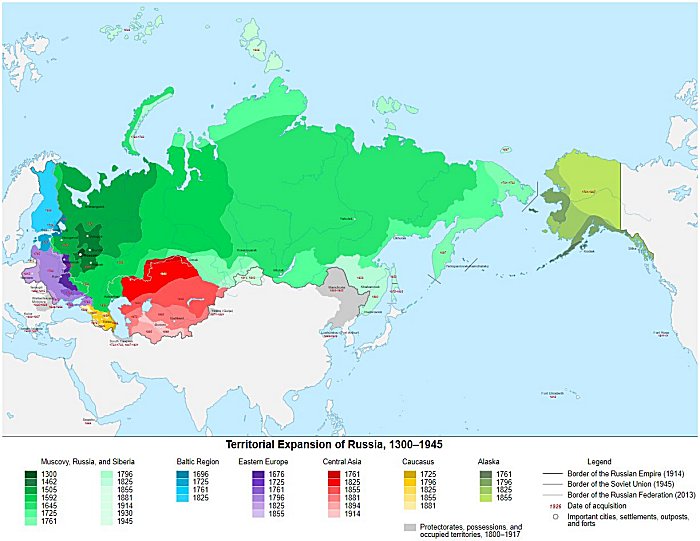
If Putin’s goal was to reunite the Soviet Union or even to reignite Communism in Eastern Europe, it would be horrendous, but understandable. That’s not good enough for Vladimir Putin. His goal is to recreate the Russian Empire and leave a legacy as one of the Greatest Russian Leaders of all time. In 1895, the Russian Empire spanned 8,800,000 square miles (22,800,000 km2) … more than 15% all of the land area of the Earth; more than 35% of all of the habitable portion. [4]
Who’s Next?
I doubt that even Vladimir Putin would have the audacity to try to take over large portions of China nor to buy back Alaska, but the fall of Ukraine would put other Eastern European countries squarely in his crosshairs. Belarus is allied with Russia already.
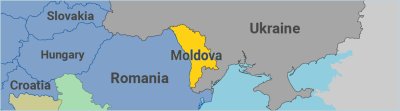
Moldova is probably a likely target. Like Ukraine, Moldova is not a member of NATO. Unlike Ukraine, Moldova is a small country. It seems unlikely that it would be able to resist an onslaught from a Russia-occupied Ukraine.
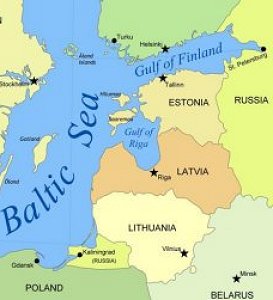
With Belarus, Ukraine, and Moldova in his thrall, Putin is likely to turn his attention to Estonia, Latvia, and Lithuania. Each of these countries are former members of the Soviet Union. All of them are strategically valuable.
Each gives Russia additional access to the Baltic Sea. Along with Ukraine, Latvia and Lithuania add to Russia’s border with Belarus. Even if Alexander Lukashenko, the President of Belarus, were to be removed, any subsequent leaders are likely to think twice before breaking with Putin.
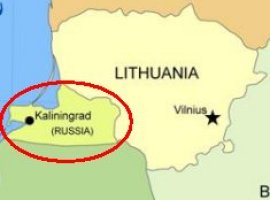
Along with Belarus, Lithuania would provide friendly overland access to the Kaliningrad Oblast … a currently-isolated piece of Russia on the Baltic Sea. Latvia and Lithuania would provide a slightly more circuitous overland route without Belarus.[5]
Most of Finland was part of the Russian Empire. After overrunning the Baltic States, would Putin try to add Finland to his blossoming empire? The Warsaw Pact countries are other possible targets. They weren’t part of the Soviet Union, but they had been dominated by their larger Cold War ally. After all, they had violated their treaty with Mother Russia. By supporting Ukraine and taking in Uranian refugees, Poland had interfered with Putin’s efforts to protect “Russian citizens” from a new “Nazi” invasion. Ukraine, Belarus, and Lithuania would be excellent staging grounds for invading Poland.
Success is a lousy teacher. [6]
Putin’s delusions of grandeur would end the moment his military invaded Estonia, Latvia, or Lithuania. They may have been members of the Soviet Union after World War II, but the Soviet Union no longer exists. All three of these tiny countries on the Baltic Sea joined NATO in 2004. Remember Article 5 of the NATO Treaty? The critical phrase is: “an armed attack against one or more of them in Europe or North America shall be considered an attack against them all”. Other members of NATO would be treaty (and honor) bound to defend the Baltic States at the first Russian incursion. Other countries who oppose the so-called western democracies are likely to come to Putin’s aid. For the third time in 110 years, a large portion of the World will be involved in a war that began in Europe.
World War III?
While it is almost certain that such a war would be named World War III, it is unlikely that it would be the Thermonuclear Armageddon that those of us who lived through the Cold War feared. When Putin first invaded Ukraine, he made a lot of noise about having nuclear weapons. Russia does have a lot of nuclear weapons … 2,170 deployed warheads. The NATO nations have a lot of deployed warheads too … 2,170. The “balance of power” is alive and well. Other countries have nuclear warheads, but they are not deployed.[7]
Putin may be an Autocrat and an old-school Imperialist, but he is neither stupid nor uneducated.[8] I believe he knows that a 2,170 to 2,170 nuclear war is a no-win situation. Unfortunately, academic intelligence and higher education do not guarantee social intelligence.[9]
The war with Ukraine actually began on March 18, 2014 when Putin declared Crimea to be part of Russia. This early success, intervening events, and the human tendency to assume that most people think the way we do[10] led Putin to believe that the February 24, 2022 invasion of Ukraine was a necessity. Ukraine’s interest in joining the European Union and NATO “proved” that the West intended to move against Russia. He had to protect his country. He believed that the invasion of Ukraine could be over in a few weeks because:
- Taking Crimea in 2014 had been easy. Ukraine complained. Other countries expressed concern. Nobody did much … if anything … about it.
- In Helsinki, President Trump sided with Putin against U.S. Intelligence Agencies.[11]
- While he was President, Donald Trump berated other NATO countries.[12]
The Perspective of the Autocrat
To an autocrat like Putin, the statements of a President of the U.S. are the official policy of the country. (Perhaps he missed the significance of the November 2020 election and President Biden’s inauguration.)
Since the 22nd Amendment of the United States Constitution was ratified on February 27. 1951, any one person is allowed to serve for two 4-year elected terms plus 2 years to complete his or her predecessor’s term. That’s it. Nobody can be President of the United States more than 10 years. The Russian Constitution has no such restriction. You can be President of Russia for as many terms as you can get elected.
The Two at the Top
The highest administrative offices in the Russian federal government are the President and the Prime Minister. The Russian President’s authority and duties mirror many of those of the U.S. President … and extend beyond them.[13] Prime Minister is an informal description. The actual title is “Chairman of the Government of the Russian Federation”. The position is primarily concerned with the more administrative requirements of running the country.[14] The President holds most of the power, but the Prime Minister keeps the government running.
The laws of both countries allow multiple political parties, but the reality at the administrative levels of each are different. The United States is effectively a two-party system. Since the election of Ulysses S. Grant every president has been either a Republican or a Democrat. Over time, government policy shifts between the right and the left … sometimes rather abruptly. Russia functions as a one-party system. Russian policy is more focused on the individuals at the top than on any party theory of government.
For the past 24 1/2 years, Putin has alternated between the offices of President and Prime Minister of the Russian Federation. From December 31, 1999 through May 7, 2000, he was both Prime Minister and Acting President.[15] This table shows Putin’s terms of office from August 9, 1999 through the Present.
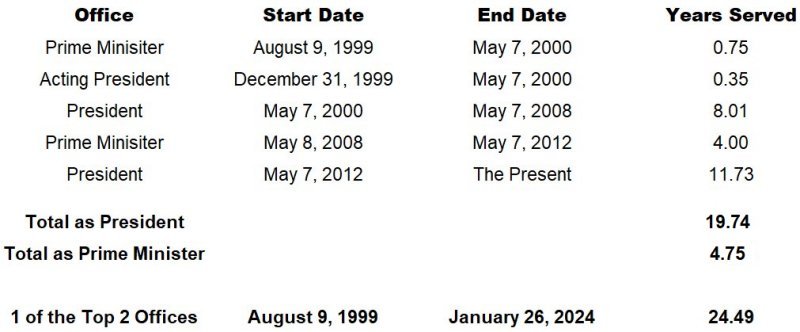
Elected before the passage and ratification of the 22nd Amendment to the U.S. Constitution, Franklin Delano Roosevelt, our longest serving chief executive, was President from March 4, 1933 until his death on April 12, 1945 … 12 years, 1 month, and 8 days (12.12 years). Vladimir Putin has been President for a total of almost 20 years (more than 20 years if we include his Acting Presidency). Is it any wonder that he is surprised by the change in U.S. policy since President Biden’s inauguration? For better or worse, U.S. policy can shift (or stagnate) every 2 years depending upon which party controls the Presidency and the two chambers of Congress.[16]
Like all autocrats (and would-be autocrats), Putin sees himself and the country he rules as equivalent. Like all autocrats, Putin sees anyone who disagrees with him as a mortal threat. Like all autocrats, Putin sees himself as the eternal victim oppressed by a world that’s out to get him. Like all autocrats, Putin uses threats and force in ways that are ultimately self-destructive. Like all autocrats, Putin is a bully.
After Ukraine expressed interest in joining the European Union and NATO someday, Putin declared that the E.U. and NATO were threatening Russia. He claimed that Ukraine was not a real country but is part of Russia. He claimed that it followed that there was no such thing as Ukrainian culture nor a Ukrainian people. He claimed that Ukraine was being run by Nazis.[17] Putin believed that he was obligated to stop the spread of a fascist-controlled NATO.
Before Russian troops invaded Ukraine, NATO had 30 members, Since then, formerly neutral Finland has joined NATO. Sweden, also formerly neutral, is only one member nation away from admission.[18] So much for preventing NATO expansion.
What do you do if a bully on the playground pushes you to the ground and demands your lunch money? You can lie there and hand him your money … or, you can stand up and face him. Ukraine has stood up to the bully … and bloodied his nose. What do you do if you see someone standing up to a bully many times his size and strength? You step up to support him until the bully backs off. We need to continue supporting Ukraine until Putin backs off.
Feel free to share or repost this article.
If you want to comment, click HERE to jump over the “Notes”.
[ Main Menu ]
Notes
[1]
The article that comes up when you click on the link “North Atlantic Treaty” has a format that you may find a bit hard to read. I did. Fortunately, there’s a button on the upper right corner that let’s you download a PDF file that’s much more readable.
Return to Point of Reference Point
[2]
I’m being generous when I say that Belarus is “strongly allied with Russia”. From what I’ve heard from contributors on news programs, Belarus is not much more than a puppet of Russia.
Return to Point of Reference Point
[3]
SFSR is an acronym for Soviet Federative Socialist Republic. SSR is an acronym for Soviet Socialist Republic.
Return to Point of Reference Point
[4]
Earth’s total land surface area is 57,308,738 square miles. Of this, 33% is desert and 24% is mountainous, making 57% of the land uninhabitable. This leaves 24,642,757 square miles of habitable land, or 15.77 billion acres. This is about 43% of the total land area.
Return to Point of Reference Point
[5]
While Belarus is already friendly with Russia, it is still an independent country. It seems likely that Putin would annex any country that his forces defeated in an invasion. After all, he managed to annex Crimea in 2014 without a war.
Return to Point of Reference Point
[6]
This header is the first sentence of a quote by Bill Gates:
“Success is a lousy teacher. It seduces smart people into thinking they can’t lose.”
Return to Point of Reference Point
[7]
The values come from a Wikipedia article entitled “List of states with nuclear weapons“.
Return to Point of Reference Point
[8]
Vladimir Putin is well-educated. He graduated from Leningrad State University with a degree in Law. Later, he received a Ph.D. in Economics from Saint Petersburg Mining University.
Return to Point of Reference Point
[9]
Social Intelligence is the ability to understand human interactions. Like academic intelligence, social intelligence develops through experience, practice, and the ability to learn. I think that it’s a bit easier to acquire academic intelligence because most cultures … at least cultures in the “Developed World” … nurture it more than social intelligence.
For example, I was provided 18 years of help in gaining my academic intelligence and credentials. Twelve of those years were required by law and paid for by the government. The same was true for most of my contemporaries. On the other hand, we had little, if any, direct help in gaining social intelligence, We were expected to gain that through unguided trial and error … or an accident of birth. (I’m still working on that. I barely understand my own behaviors much less those of others.)
Return to Point of Reference Point
[10]
I call this the “lowest common denominator” fallacy. It’s most obvious in the expression, “Well, everybody knows …”. It also manifests in the belief that others are driven by the same needs and goals as we are. Autocratic leaders tend to believe that ALL other leaders are autocrats.
Return to Point of Reference Point
[11]
Return to Point of Reference Point
[12]
Return to Point of Reference Point
[13]
This note is my summary of the “Powers and duties” section of the Wikipedia article entitled “President of Russia“.
Guarantor of the Constitution
The president ensures that the constitutions, laws and regulations of the constituent territories of the country comply with the Constitution and federal laws.
Nominations
The president submits nominations to the Federation Council (upper house of parliament) for:
- Judges of the Courts and the Supreme Court and the Prosecutor General
- Chairperson of the Central Bank
- Removal of the Prosecutor General or Chairperson of the Central Bank
Legislation
The president has the right to:
- Submit draft legislation
- Sign bills into law or to veto them
- Suspend laws and regulations issued by executive bodies that violate:
- The Russian Constitution
- Federal laws
- International obligations of the Russian Federation
- Human and civil rights and liberties
- Issue by-laws by decree, as long as they do not contradict existing laws, international agreements or the Russian Constitution
- Grant federal pardons and reprieves
- Convene and adjourn either or both houses of the Federal Assembly under extraordinary circumstances
- Call elections of the State Duma
- Dissolve the State Duma in certain cases, and call a referendum
Domestic policy
The president is empowered to:
- Provide basic guidelines for short-, middle-, and long-term objectives and targets of domestic policy
- Express fundamental positions on domestic policy issues in their written decisions regarding draft federal constitutional laws and draft federal laws, as well as their letters explaining the reasons for rejecting draft federal laws
- Shape the basic domestic policy guidelines by issuing legal regulations and through organizational and regulatory activity
Each year the president is required to make an Address to the Federal Assembly regarding the situation in the country and the internal and foreign policy of the state.
Foreign policy
The president is invested with extensive rights to implement the state’s foreign policy. The president:
- Determines Russia’s position in international affairs
- Represents the state in international relations
- Conducts negotiations and signs ratification documents
- Appoints and recalls diplomatic representatives of Russia to foreign states and international organizations
- Signs international treaties
Commander-in-chief
As “Supreme Commander-in-Chief”, bearing ultimate authority over the Russian Armed Forces, the President is able to:
- Order a general or partial mobilization of the military
- Announce martial law
- Oversee the war industry and make regulations
- Launch atomic weapons in response to:
- WMD or ballistic missile strikes
- Attacks that threaten the integrity of the nuclear arsenal
- Attacks that may jeopardize the country as a whole.
Ceremonial duties
The President’s ceremonial role includes presenting state awards … the highest form of official recognition given to individuals for service to the nation.
Return to Point of Reference Point
[14]
This note is my summary of the “Duties and Competencies” section of the Wikipedia article entitled “Prime Minister of Russia“.
The Prime Minister is appointed by the President of Russia, subject to the consent of the State Duma. The duties of the office include:
- Determining the operating priorities of the government and organizes its work … running the government day-to-day
- Submitting to the president:
- Proposals on the structure and functions the executive branch
- Nominations of the vice prime ministers, federal ministers and other officers
- Proposals on punishment and rewards of the government members
- Representing the government as an institution in foreign relations and internally
- Heading the sessions of the government and its Presidium where he has the decisive vote
- Signing the acts of the government
- Reporting annually to the State Duma about the government activities
- Distributing duties among members of the government
- Keeping the President informed about government activities
- Serving as an ex officio member of several government councils
Return to Point of Reference Point
[15]
Putin was Prime Minister when Boris Yeltsin resigned before the end of his term. As the second highest official in the government, Putin took over as Acting President until the end of Yeltsin’s term … at which time, Putin was elected President.
Return to Point of Reference Point
[16]
Of course, a U.S. President who buddies up to dictators and trusts their word over the information gathered by our own intelligence agencies is an anomaly that had not happened before. We had one previous insurrection, but that wasn’t led by Abraham Lincoln and his supporters.
Return to Point of Reference Point
[17]
Volodymyr Zelenskyy, the President of Ukraine, is Jewish. Putin must believe that the Nazis have become much more liberal in the nearly 8 decades since Germany was defeated in World War II.
Return to Point of Reference Point
[18]
While the Hungarian government formally supports Sweden’s accession, the country’s parliament has not voted on the matter. Their Prime Minister, Viktor Orbán often criticizes other NATO states and may be nurturing relationships with Russia and China.
Return to Point of Reference Point
This the end of the article. The comments section is below.

 My Less Than Humble Opinion